
Residential Smoking Room Calculator
The LakeAir website offers many different calculators. This calculator was designed by Randolph Bush, the President of LakeAir. He has been helping home and business owners with solutions to remove smoke and odors since 2015. This calculator was designed in February 2026.
This calculator was designed to allow visitors to enter the room’s dimensions, select from 4 air-purification settings, and choose from 4 noise levels. Beyond that, the visitor can select the amount and type of ventilation for the project. If you have any questions or comments, please reach out to our customer service team at 800-558-9436.
Calculator Instructions
The Calculator can be broken down into 7 sections
- Dimensions
- Presets
- Air Purification Level
- Noise Reduction
- Ventilation
- Ventilation Types
- Filter Selection
- Summary
Dimensions
Dimensions are the first set of fields you will come across. It is pretty simple, but there are times when the project doesn’t give you a nice rectangular room with a ceiling that is the same height throughout.
When you come across a room layout with an unusual shape or with multiple areas, you will need to determine the entire space and enter the dimensions into the calculator as if it were a single rectangle.
If the ceiling height varies, again determine the average height and enter that value.
While being exact is ideal, don’t obsess about being accurate to the inch. There is plenty of wiggle room throughout the calculator, so you can be confident in the calculation and price results

Presets
Why we use these standards I built these presets because, after years of helping people set up smoking rooms, I realized most projects fall into one of five categories. Think of these as “field-tested shortcuts.” They don’t just change the air changes; they actually tell the calculator how to “round up” on equipment so you don’t end up underpowered.
Want to DIY the math? You aren’t locked into my settings. If you’re a contractor who wants to weigh the equipment costs against specific results, just toggle the presets to “NO.” This removes the presets, and all settings will be up to you.
- Standard: The standard for cigar ventilation starts at 20 air changes per hour. This setting will provide a reasonably comfortable atmosphere
- Solid: Most of the commercial systems we sell are based on the “solid” preset. 20 air changes per hour for smoke and odor control with enough extra filtration to allow the system to run at 20 ach and have a system noise level comparable to normal conversation.
- Premium: When a customer wants a little more than a solid system, we accomplish this by adding 5 more ACH. The air is cleaner, it can run quieter when there are fewer guests. “Premium” offers a little more performance and makes a nicer environment
- Elite: Elite is plain and simple overkill. When a customer wants everyone to be happy, there are no smells slipping into the house, ever. This overkill creates an environment where, even when 4 extra people show up for the game or poker, everything is still perfect.
- Iconic: Think of Iconic as “stupid nice”. This goes beyond overkill. This is for the guy who says I want what I want when I want it. Iconic is much more common than you might believe, a home cigar room is becoming a defining part of a cigar lovers life,
Air Purification Level
Minimal: This is for the guy who smokes a cigar alone once or twice a week. It’s not going to clear the room instantly, but it’ll get the job done eventually. It’s the budget-friendly way to keep things from getting stale.
Moderate: If you’re a cigarette smoker or you only occasionally have a buddy over for a cigar, this works. You might see a little haze while you’re mid-smoke, but the room will clear out pretty quickly once you’re done.
Enhanced (The Standard): This is where I steer most of my clients. At 17-20 ACH, this is the same level of power we put into pro cigar lounges. It’s trustworthy, it’s effective, and it’s what you need if you want a “real” smoking room experience.
Premium: This is the new favorite. Over the last year, more people have been jumping to 21-25 ACH than ever before. It doesn’t actually cost that much more—maybe 10-15%—but it gives you that ultra-clean air that stays ahead of the smoke even when the room is full.

System Background Noise
No Reduction: This is the “Full Tilt” setting. It sounds like a busy restaurant. It’s fine if you’ve got the game on loud, but you’ll definitely know the fans are running. (68-72 dB)
15% Reduction: My “standard” recommendation. This gets you down to the level of a normal conversation. You can talk over it without raising your voice, and it fades into the background pretty quickly. (60-66 dB)
30% Reduction: This is where it gets impressive. It sounds like rain falling on a roof. It’s a steady, soothing hum that won’t interfere with your music or a movie. (Mid-50s dB)
45% Reduction: The “Ghost” setting. This is comparable to a quiet conversation. To get here, we basically double the filter volume so the fans can barely whisper while still scrubbing the air. (Under 50 dB)

Ventilation & Ventilation Type
Ventilation
When we talk about ventilation, we mean pushing dirty air outside and bringing in fresh air. That fresh air coming in is called makeup air. Making up the dirty air we are expelling. Makeup air is the same as compensating air, in case you have heard that name instead.
Fresh outdoor air is introduced into a building to replace air exhausted by exhaust systems. In a smoking room or lounge, even with a professional air purification system, some gases cannot be filtered out of the air. Two main examples of these gases are carbon monoxide and carbon dioxide.
The calculator has 6 choices. Two air changes per hour is most common for home smoking rooms. In most cases, more is better with an ERV. However, if you are using untreated air, keeping the ventilation amount lower helps keep the room more comfortable.
Ventilation Type
Make-up air does not have to be an expensive undertaking. There are a few good DIY options available for under $300.00. If you don’t wish to hunt for those systems, they can be bought through LakeAir for under $400.00
The DIY systems add untempered (hot, cold, humid) air to the smoking room. This can make a room less comfortable temperature-wise. The best make-up air systems are energy recovery ventilators (ERVs). LakeAir is a distributor of the RenewAire Line of ERV systems. An ERV combines the air entering and exiting the cigar room in a heat exchanger. As the air entering the cigar room mixes with the air exiting, the temperature and humidity are transferred from one air source to the other. The result is clean air entering the room, with temperature and humidity close to those of the smoky air exiting.
Filtration Types
HEPA
HEPA: The Only Real Choice
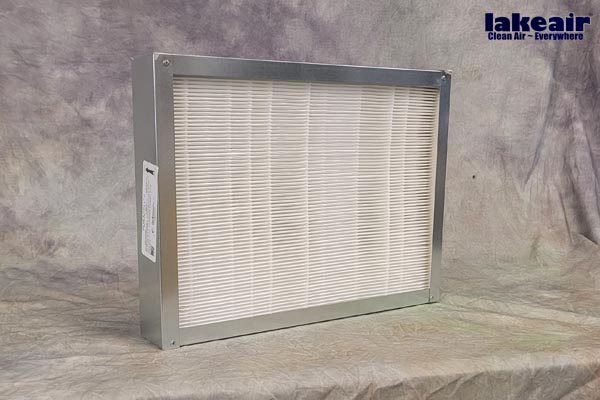
I’ll be blunt: I suggest HEPA in almost every smoking room I consult on. It’s 99.97% efficient, which means once the smoke goes in, it stays in. It’s basically a dead end for smoke.
An added bonus that most people don’t realize is that these filters act like a muffler. They actually soak up a few decibels of sound so the room stays quieter. Maintenance is dead simple—you swap them out once a year and you’re done.
Electrostatics

Electrostatic: Washable filter
These are washable, which sounds great because you aren’t buying new filters every year. They move a ton of air and they’re highly efficient.
But here is the catch: you have to wash them 4 to 8 times a year. If you don’t stay on top of it, the performance drops. Also, they “snap.” When large ash particles hit the grid, it makes a loud pop. If you want a quiet, zen-like room, you’re going to hate that sound.
Carbon Odor Control

Carbon: Killing the Smell
While the HEPA catches the smoke you see, the carbon is there to handle the gases you smell and feel. Cigar smoke has quite an odor, but it has gases that make your eyes water and burn. We ship our new units with the largest carbon filter available, which always has enough carbon to trap those odors before they can become a nuisance.
MERV 15
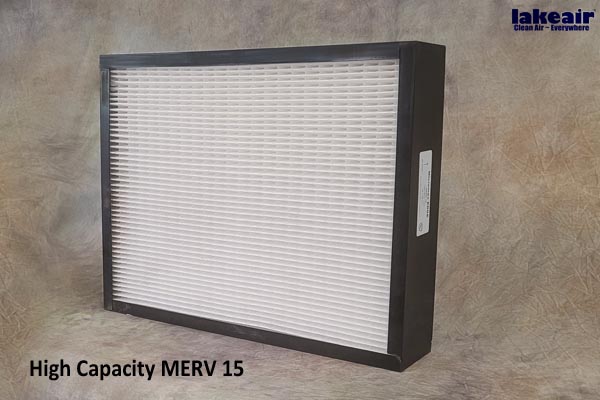
We sell these, but they are not designed for your premium cigar room. Smoke particles are tiny, and a MERV 15 is like trying to catch sand with a chain-link fence. It lets 5% to 15% of the smoke blow right back into the room. It’s a great filter for a workshop, but for cigars, there are better choices.
Calculator Summary
What the Numbers Mean
The Equipment Cost: This is my recommendation based on the room size you gave me. Our software rounds the units up or down to make sure you have the power you need. If you want to add an extra unit or scale back, that’s your call.
Ventilation & ERVs: We don’t manufacture ventilation gear ourselves, but we’re a reseller of RenewAire. I’ve looked at everything on the market—some have more bells and whistles, but these are the workhorses. They’re built to last, and that’s why I sell them.
No Hidden Fees: The price you see is the price you pay. Unless you need something custom—like a 25-foot cord or shipping outside the lower 48—there aren’t going to be any “surprise” costs at checkout.
Maintenance Costs: The annual filter estimate assumes a “heavy use” scenario (2 HEPA and 3 Carbon filters). To be honest, about half my customers get away with just one HEPA swap a year. If that’s you, knock $200 per unit off that annual estimate.
The HVAC Estimate: We don’t sell AC units, but many website visitor asks me about them. I did the research and added a “Mini-Split” estimator here just to give you a ballpark idea of what you’ll pay for the equipment to keep the room cool separately from your home system.
A Note on Privacy
If you want a copy of this sent to your inbox, just drop your email below and hit the green button. If you leave a number, I’ll give you a call. If not, I’ll send the email and leave it at that. I don’t sell or share your info. Period.

Technical Abstract and Scope
This calculator is authored by Randy Bush, CEO and design engineer at LakeAir. It is designed for residential contractors, HVAC professionals, and serious homeowners seeking performance-based guidance for home smoking room air purification.
The Residential Smoking Room Calculator automates system sizing based on:
• Cubic room volume
• Target Air Changes per Hour (ACH)
• Acoustic constraints (noise floor targets)
• Filtration type selection (HEPA, MERV 15, Electrostatic)
• Optional mechanical ventilation equipment selection
The tool is built on proprietary field data and real-world performance testing of cigar smoke particulate behavior. It provides equipment recommendations and estimated annual filter replacement costs based on defined engineering thresholds.
This page is intended as a sizing and specification tool. It does not replace formal HVAC load calculations or code compliance review where required.