
Cigar Lounge and Smoking Room Planner
When you decide to open a cigar lounge—or rebuild the one you’ve got—the air system becomes one of the first real decisions you have to get right. If the air isn’t comfortable, people don’t stay, and if they don’t stay, they don’t spend. This guide walks you through the parts most owners don’t see coming until they’re knee-deep in contractors and invoices.
This page is written with commercial lounges in mind: cigar bars, private clubs, hospitality spaces, and any place where smoke is part of the business model. If you’re building a home smoking room or handling a small project for a client, you’ll still get solid value here. A few sections—like municipal submissions—may not apply, but the fundamentals are the same. (And if you need a residential version, we’ve got that too. The Home Smoking Room Planner opens in a new tab so you can explore it without losing your place here.)
We’ve worked with everyone from big casinos to small-town cigar shops, and plenty of places in between—Legions, VFWs, fraternal lodges, and a long list of lounges you’d recognize if we sat down for a smoke. Point is, we’ve been doing this a long time, in real rooms with real people, and we’ve solved problems that don’t show up on spec sheets. That’s why people come to us. We know how to make a smoky room work right.
Identifying your Priorities
Before you get into equipment choices and calculations, it helps to understand the major parts of a successful cigar-lounge air-quality plan. These six priorities reflect what actually matters in the real world — not theory, but what hundreds of lounge owners have had to deal with.
1. Smoke Removal
Your filtration choice (HEPA, Electrostatic, or MERV 15) determines how clean the air can get, how the room feels, and what your long-term costs look like. This is the foundation of the whole project.
2. Ventilation
Some cities require it, some don’t. Requirements can range from 5% to 100% fresh-air replacement, or they may specify ERVs. Understanding what your municipality expects early prevents surprise expenses later.
3. Odor Control
Removing smoke and removing odor are two different things. Carbon filtration handles gases and lingering smells — the difference between “acceptable” and “this room feels amazing.”
4. Noise Levels
Every air purifier makes sound. The question is: how much?
If you want the room quieter, you plan for extra equipment so everything runs slower. This is where many owners underestimate what they need.
5. Installation Requirements
Some owners install their own equipment. Others hire HVAC contractors. Ceiling height, electrical access, ducting options, and mounting style all affect the final cost and complexity. Planning this early keeps your budget honest.
6. Permits & Local Ordinances
Depending on where you live, permits may be simple or heavily code-driven. Some municipalities want basic paperwork; others expect engineered drawings. Knowing what your local reviewers will ask for helps you avoid delays and unnecessary redesigns.
Budgeting for your Smoking Area
For the sake of simplicity, we will use an average of the cost for electrostatic and HEPA filtration equipment. Because each smoke eater accounts for a large volume of air, it is reasonably likely that your cost will vary when your space size falls in between unit capacities.
We will present four options:
- Basic Smoke Removal
- Improved Smoke Removal
- Enhanced Smoke Removal
- Premium Smoke Removal
Basic Smoke Removal: Basic smoke removal level is less than the amount we recommend. Basic smoke removal level (10 air changes per hour) is the level we suggest for a private smoking area with a couple of people smoking. The average cost for this level of smoke removal is about $4.25 per square foot (with a 10-foot high ceiling) . If your ceiling is higher or lower, you can adjust the cost accordingly.
Improved Smoke Removal: An improved smoke level (15 air changes per hour) is also less than our recommendation. This level will remove the majority of the smoke but a haze will linger with heavier smoking. The average cost for improved smoke removal equipment is about $5.50 per square foot. Again, this cost is based on a 10-foot high ceiling, and you should adjust your cost accordingly.
Enhanced Smoke Removal: Enhanced smoke removal uses the figure of 20 air changes per hour, and this is the level at which the space should be relatively free of smoke. A haze may develop at peak surges. The calculated average equipment cost for enhanced smoke removal equipment is about $6.75 per square foot. Remember to make adjustments to your cost based on your actual ceiling height above or below 10 feet.
Premium Smoke Removal: 25 air changes per hour is the standard set for premium smoke removal. Based on the 9-foot ceiling height, a cost of about $8.50 per square foot has been calculated. This level of smoke removal is considered to be overkill by most, but it certainly provides a great environment for smoking enjoyment.
The costs listed above are rough estimates that are prone to change. Every room and every project presents unique challenges. This is a budgetary figure to help you plan your smoking area. We will look at a calculator that helps you choose the actual equipment needed later on in this web page.
Noise Reduction
One of the most effective ways to reduce noise in a cigar lounge is surprisingly simple:
use more total blower capacity and let each blower run at a much lower speed.
A single blower running hard creates most of its noise from fast-moving air and turbulence. But when you spread the same workload across more blowers running gently, those noise sources collapse. The smoke still clears just as fast — often faster — but the room becomes noticeably quieter.
Here’s what that feels like in a real lounge:
One unit running at full power sounds like a strong, steady hum. It’s doing all the work, and you hear it.
Several units running at low power sound more like a few soft background whispers scattered around the room. None of them are working hard enough to draw attention.
This is why adding system capacity reduces noise instead of increasing it.
More capacity lets every blower relax.
When we distribute the airflow across additional units, the total CFM stays the same, but the perceived sound level drops sharply — commonly by 15%, 30%, or even more, depending on how gently each blower can operate.
This approach isn’t about oversizing equipment. It’s about creating a quieter, more comfortable environment where conversation and smoke removal work together instead of competing. The other benefit of this approach is if you experience a sudden increase in the number of visitors in your lounge ( a bachelor party for example) you have the extra capacity in your system to quickly ramp up air purification to provide clean air for everyone.
Budgeting Noise Reduction
Noise reduction comes down to one simple reality:
quieter rooms require more units running at lower speeds.
More units = more cost.
Here’s the budget impact using the three noise-reduction levels that fall into clean breakpoints:
• 15% Noise Reduction
Costs ≈32% more than running fewer units at full power.
• 30% Noise Reduction
Costs ≈77% more.
• 40% Noise Reduction
Costs ≈150% more.
Budgeting Ventilation
Ventilation isn’t included in every cigar lounge, but it should be. Air purification handles smoke and odor, but it can’t remove certain gases, and it won’t make a room smell fresh on its own. Ventilation is what finishes the job.
Some municipalities require that all ventilated air be conditioned — heated, cooled, and humidity-treated — before it re-enters the room. When that’s the case, the job is handled by an ERV (Energy Recovery Ventilator). In an ERV, outgoing air passes through a heat exchanger. Incoming air passes through the same exchanger, which warms or cools the replacement air and adjusts humidity as needed.
ERV pricing varies with room size and duct complexity. We’ve seen them come in surprisingly low for small lounges and much higher for large rooms or complicated duct paths. A realistic range is:
• Small ERVs: $1,500–$4,000
• Mid-size units: $4,000–$8,000
• Larger commercial ERVs: $8,000–$20,000+
Most cigar lounges fall in the lower half of that range, because the ERV isn’t doing the heavy lifting — the smoke eaters are.
If your city requires dedicated outdoor air or you’re working with an engineer who wants balanced fresh-air exchange, you may need an ERV. If not, you may not need one at all.
If your municipality does not require the air to be conditioned, you can use the LakeAir Makeup Air Unit (LAC-MUA) instead. It provides the required ventilation and runs $1,800. This is why ERV cost is shown separately: ventilation is a building-driven cost, not part of the per-square-foot smoke-eater budget.
Installation
Installation costs swing a lot. We’ve seen everything from $150 to $1,500 per unit, depending on the building, ceiling height, wiring access, and who’s doing the work. A good HVAC tech can usually hang and wire a unit in under two hours.
If you need a number for planning, use $400 per unit as a solid budget point.
If you’re doing it yourself, it can be much less.
Installing a smoke eater isn’t rocket science. Plenty of shop owners do their own installs. The key is having the right tools: a lift (scissor or drywall), basic wiring supplies, and a clean way to support the unit while you mount it.
If you run into trouble, call us. We’ve talked dozens of customers and installers through every kind of “weird building” problem you can imagine. We’ll help you sort it out.
Install Yourself

By using a drywall jack you can easily lift your cigar air purifier into place. In this case we used the shipping cradle to protect the finish of the smoke removal equipment.

Ordering a smoke eater with onboard Bluetooth allows you to hang your unit, plug it in, and go.

We offer hardware kits for hanging your smoke eater. Self-installation can save you thousands of dollars. We will be here with any installation questions you might have.
Engineering Cost
Some municipalities want full engineered plans. Others will hand you a permit over the counter with nothing more than a simple mechanical layout. There’s no universal rule, and this is one of the places where projects either stay simple—or get expensive.
A few states and cities almost always ask for engineered drawings.
Michigan, Minnesota, and California are common examples.
If you’re opening a lounge there, expect the city to want stamped plans.
When a municipality requires a full mechanical set, the cost usually lands between: $3,000 – $6,000 for a complete engineered plan set
Those numbers are current and realistic.
Smaller towns may skip engineering entirely, or accept a basic airflow plan that costs very little to prepare. If your city needs stamped drawings, budget for it early so it doesn’t blindside you later.
Code Interpretation & the LakeAir Method (Budget Impact)
When a city requires engineered plans, the way the code is interpreted has a direct impact on what you’ll spend. This is one of the few areas where having LakeAir as an advocate can save a lounge owner a serious amount of money.
Many engineers default to standard commercial ventilation rules when they design a cigar lounge. That usually leads to oversized systems, oversized makeup air, oversized ductwork — and oversized invoices. We’ve seen lounges spend tens of thousands more than needed simply because nobody questioned the starting assumptions.
Engineers tend to tell you, “This is how it has to be.” That can be changed. LakeAir knows the parts of the code where exceptions exist and when they apply. These exceptions were written because ASHRAE and the IMC both recognize a project has to make financial sense. The main one we work with is IMC 403.2.
When 403.2 applies, it opens a different design path that can lower the mechanical load on the entire project, as long as the equipment meets the section’s requirements and the engineer has documentation to support it.
That’s where we step in. We don’t replace the engineer, and we don’t change their fees.
What we do is: Point out when IMC 403.2 should be in play. Provide the documents proving our equipment qualifies. Help the engineer apply the section correctly. Prevent unnecessary tonnage, duct runs, and makeup-air penalties
Used the right way, 403.2 doesn’t lower engineering cost, it lowers total project cost by stopping overbuilt designs before they get stamped.
We’ve had multiple mechanical engineering firms change their entire approach to cigar-lounge ventilation after reviewing our method. Not because we pushed them, but because the code backed it up and the math checked out.
We’ve saved lounges over $80,000 on a single project using this process.
The LakeAir Method isn’t a theory — it’s something real engineers have reviewed, accepted, and now use in their own designs.
Budget Summary
Setting a budget for a cigar lounge comes down to a handful of core items. The air purification equipment typically runs between $3 and $8 per square foot, depending on whether you’re planning for 10, 15, 20, or 25 air changes per hour. If your room falls between unit sizes, the final number might drift a bit higher or lower, but this range works well for early planning.
Some owners choose to make their lounge quieter by running more units at lower speeds. That approach works, but it increases equipment cost. A 15% noise reduction usually adds about 32% to the system cost, 30% noise reduction adds around 77%, and pushing for 40% can increase the price by roughly 150%. It’s optional, but worth knowing upfront.
Installation costs vary widely. We’ve seen projects anywhere from $150 to $1,500 per unit, depending on ceiling height, wiring access, and the amount of help you have. A safe budget figure is around $400 per unit, and much less if you’re doing the work yourself.
Ventilation is sometimes required and sometimes not. If your municipality requires treated ventilation, an ERV may be part of the project. Smaller ERVs run between $1,500 and $4,000, mid-sized between $4,000 and $8,000, and large commercial units can go over $20,000. If conditioned air isn’t required, the LakeAir LAC-MUA provides code-compliant make-up air for about $1,800.
Permit costs range from nothing to several hundred dollars depending on local rules, and engineering can add $3,000 to $6,000 when stamped mechanical plans are required. Some states—Georgia, Michigan, Minnesota, and California—are especially likely to require formal engineering.
Finally, how your engineer interprets the code can change the entire cost of the project. We help owners and engineers apply IMC 403.2 correctly, which often prevents oversized HVAC systems, unnecessary make-up air requirements, and ductwork that doesn’t need to be there. The LakeAir Method has been reviewed and adopted by multiple engineering firms because the code supports it and the math works. In the right situation, this approach has saved lounge owners tens of thousands of dollars.
Calculator Takeaways
Choosing the Filtration Type that fits your Style and Budget
In the next section—the Cigar Lounge Air Purification Calculator—you’ll be asked to pick a filtration type. That choice matters because it drives the calculator’s summary. Once you select a filter type, the tool will show you:
How many smoke eaters you need
How much ventilation your lounge requires
The MSRP for the equipment
Your annual filter-replacement budget
Across our website, we go deep into how to clean cigar smoke out of the air. The reality is simpler: there isn’t one “best” answer for every lounge. Different locations, layouts, business models, and budgets call for different approaches.
Before you get into the calculator, here’s a quick look at the three filtration options and where each one makes sense.
HEPA Filtration

- All LakeAir HEPA units have an MSRP of $2700.00
- Annual filter replacement cost is $600 – $1000
The Cleanest Solution
HEPA filtration gives you the cleanest air in a single pass. Smoke goes in and it stays in. For most cigar lounges, the filter only needs to be changed every six months, which makes HEPA the easiest choice in terms of day-to-day upkeep.
HEPA does move less air than other filters — roughly 18% less than MERV 15 and about 25% less than electrostatic. In the real world, that just means you size the blower correctly. When you do, the system more than makes up for the lower airflow and you get extremely clean, predictable results without the hassles that come with washing electrostatic cells.
Because of the balance between cleanliness and low maintenance, HEPA ends up being the option most cigar lounges prefer.
Electrostatic Filtration

- All LakeAir Electrostatic units have an MSRP of $3000.00
- Average Annual filter replacement cost is $400.00
High Volume Air Purification
Electrostatic filtration moves a lot of air and pulls a lot of smoke. A clean electrostatic cell runs at about 97% efficiency, which puts it ahead of all media filters in terms of raw smoke removal. Only a HEPA filter cleans the air better in a single pass. Filter replacement costs are also much lower — roughly 58% less than a typical HEPA or other media system.
The downside is maintenance. Electrostatic systems cost about 11% more up front, and you’ll need to wash the filter cell regularly. Most lounge owners spend one to two hours a month on that chore. When the cell is freshly cleaned, the system performs beautifully. But electrostatic cells don’t stay at 97% for long — efficiency drops 1–3% a week, and after a month it can fall into the mid-80% range if it isn’t washed.
For shops with a steady supply of free labor — VFWs, American Legions, Moose, Elks — electrostatic can make a lot of sense. For a busy cigar lounge with paid staff, it’s usually more trouble than it’s worth.
MERV 15 Filtration

- All LakeAir MERV 15 units have an MSRP of $2600.00
- Average Annual filter replacement cost is $600.00
Budget Air Purification
MERV 15 filtration gives shop owners a workable, budget-friendly way to clean the air. These units run about 11% cheaper than the more efficient options, and the filters remove around 95% of the smoke. They’re simple to replace, and if you ever want cleaner air, you can drop in a HEPA filter without changing equipment.
The trade-off is efficiency. MERV 15 does a decent job, but the finest smoke particles—the ones that hang in the air the longest—move right through it. It’s a cost-conscious choice, but not the level of cleanliness most cigar lounges are aiming for today.
Out of the hundreds of smoking environments we’ve outfitted over the years, only a handful have chosen MERV 15 as their long-term solution. Most eventually move to HEPA once they see what cleaner air really feels like in a cigar room.
Calculator for Cigar Lounge Air Purification
LakeAir is here to supply you with the air filtration for your smoking room. The question is, how much air purification do I need? We will answer this question and introduce the idea of adding Ventilation to help manage smoke when it gets thicker than normal. Ventilation can also lower the costs of equipment purchases. If you need help using the Air Purification / Ventilation Calculator, we have detailed instructions. To see the Instructions, click on the Calculator Instructions tab below. Otherwise, you can continue to the calculator now.
Image below is for illustration only ~ do not try to select option
Determine Amount Air Filtration / Ventilation Needed for Your Location.
This Calculator will help you choose the right amount of air purification and ventilation for your smoking facility. There are 4 steps laid out below
- Determine the size of your smoking area.
- Set the Air Quality Level for your system
- Set the level of Ventilation for your smoking project
- Set the level of air purifier noise reduction, if any
- Choose the filtration type for your cigar Lounge
The following calculating tool allows you to input most of the pertinent information about your shop. Here is a list of the things you will enter. We will explain them so its easy to understand. Experimenting with the Cigar Shop Ventilation Calculator will help
Smoking Area Size (dimensions)
(1)Type in the length, width, and ceiling height. If the ceiling is sloped, use the average height. The calculator will show the square footage automatically. If there are offices, closets, or other spaces that don’t need air purification, subtract them from the total. Don’t worry about being perfect here—this tool is meant to get you close, and we can fine-tune things later.
Image below is for illustration only ~ do not try to input numbers

Level of Cleanliness
You’ll see four options based on Air Changes per Hour (ACH).
10–13 ACH is the minimum, and you should expect a light haze when the room gets busy.
14–16 ACH handles moderate traffic nicely.
17–20 ACH is the level we recommend for most lounges because it keeps the air clean during regular business and only gets hazy at peak times.
21–25 ACH gives you extremely clean air and will usually make your lounge the cleanest in your area.
Image below is for illustration only ~ do not try to adjust slider.

Background Noise
(4) Different lounge owners have different tolerances for background noise. Some don’t mind if the equipment is noticeable, while others want the room as quiet as they can reasonably make it. That’s why the calculator includes a noise option. It doesn’t change your target air quality; it changes how hard the equipment has to work to achieve it quietly.
The first option, “No Adjustments for Background Noise,” assumes the equipment will run at full speed. This delivers the required cleaning performance with the highest noise level, and it’s the least expensive path because it uses the least total air volume.
The next step up is “15% Background Noise Reduction,” which is the most common choice among shop owners. The calculator adds roughly 46% more airflow to your total requirement. That extra capacity lets the system reach your target cleaning level while running about 15% quieter.
If you want the room even quieter, the third option increases the total cleaning volume by seventy-five percent. With that much capacity spread across the system, you can reach your air-quality goals while cutting background noise by about 30%.
The highest level in the calculator represents a 45% noise reduction. Hitting that number requires roughly 150% more total cleaning volume. It’s the quietest option the calculator supports, and the display includes a real-world example to help you understand what that sound level feels like in an operating lounge.
.

Air Purification / Ventilation Split
(2) Most municipalities require at least some ventilation. Some of these places require the air to be treated. 1 ACH or 5–10% of the total volume works well. Higher percentages bring in more outside air and cost more to treat, especially in hot or cold climates.
Image below is for illustration only ~ do not try to adjust slider

Choosing a Filtration Type
(5) In this section, you can choose a filtration type. You will notice that as you choose different filtration types, your final cost goes up and down. Each filtration type has its pluses and minuses.
- MERV 15 has a lower filter replacement cost but only removes 95% of the smoke. It saves you money at the cost of dirtier air.
- HEPA gives you the cleanest air but carries a higher cost of filter replacement
- Electrostatic saves you money on filter replacement costs, but it requires frequent cleaning. The cleaning level starts at 97%, but efficiency drops over time. We estimate the efficiency drops 1-3% per week.
Image below is for illustration only ~ do not try to select option

Air Flow Breakdown and Calculator Summary
The first part section provides you with information on your total air flow requirements, based on the choices made further up in the calculator. This entire section is calculated “dynamically” and provides instant results as you change any information entered above.
The summary shows you what you chose above and what the resulting choices represents in the cost of cleaning the air in your Cigar shop / lounge / bar. The summary provides an estimate on what your replacement filter cost will be based on your filtration type. This cost is based on average costs and our recommended filter replacement schedules.
Image below is for illustration only ~ do not try to input numbers

Calculator Takeaways
We strongly suggest you play with the settings. Look at how performance and cost is affected by changing the different variables. If you would like help or more information about using the calculator, please call 262-632-1229 for personal help.
This calculator is intended to educate consumers. Whether you buy your air purification system from LakeAir or another company, the results will be similar. We use sound and power statistics provided by the blower manufacturer. These air volumes and resulting noise levels are documented and reliable.
Lastly if you would like to have us contact you with more information add your email address and phone number in the last fields and hit submit. One of our Air Purification specialist will contact you.
Odor Control Filters Costs
We are increasingly seeing a shift in filtration priorities. Removing odor from the smoking establishment has never been as important as it is today. The only way to remove smoke odor is with odor-adsorbing media. The cost of “carbon” filters is one of the normal expenses in keeping the air clean in your cigar lounge.
We offer multiple levels of odor removal in all of our smoke eaters. We will refer to these as essential, enhanced, and premium odor-removing levels. Below is the annual budget for each level of odor removal

Basic Odor Removal
- $330 per year per unit per YEAR
- ≅500 grams of adsorbing media
- replace every 3 months
Enhanced Odor Removal
- $450 per year per unit per YEAR
- ≅1000 grams of adsorbing media
- replace every 4 months
Premium Odor Removal
- $600 per year per unit per YEAR
- ≅ 2000 grams of adsorbing media
- replace every 4 months
Electrostatic Filter Maintenance
Electrostatic filters shine in one area: they’re washable. That’s a genuine advantage. You’re not buying replacement filters every few months, and a clean electrostatic cell removes about 97% of smoke in a single pass.
The trade-off is maintenance.
As the cell loads up with tar and particles, its efficiency drops. From customer reports and our own testing, we see a decline of 1–4% per week. By the 6-8 week mark, a neglected cell may be running at 70% efficiency—or even lower. That drop-in performance is why washing on a schedule is so important.
The cleaning itself isn’t difficult, but it does take time. A good rule of thumb is:
About 2 hours per unit for a complete wash, dry, and reinstall; faster if you have a dishwasher—many owners do it that way; slower if the filter hasn’t been washed regularly.
When you add up time, cleaning supplies, and occasional deep washes, most shops average around $400 per unit per year in maintenance cost. For places with volunteer labor (VFWs, clubs), electrostatic makes perfect sense. Coincidentally, $400.00 a year is what it would cost to buy replacement HEPA filters. For a busy lounge, it’s something to weigh carefully.
HEPA Filter Replacement Costs
HEPA is the gold standard — 99.97% removal in a single pass. No washing, no fuss. When it’s time, you slide the old filter out, drop a new one in, and you’re done. The only sticking point for most lounge owners is cost.
How often you replace a HEPA filter depends on how much smoke you push through it:
Heavy-use environments (casinos, big lounges): every 3 months
Busy cigar shops: every 6 months
Light-traffic or new lounges: once per year
➤ $225–$450 per unit per year: Based on what we see across hundreds of installs. (using our subscription pricing)
It’s predictable, hands-off, and consistent — which is precisely why most shops choose HEPA even though it isn’t the cheapest option.
Supplemental Ventilation
As indoor smoking gains more acceptance, many municipalities are requiring supplemental ventilation. Each city, county, and township seems to have its own requirements. Some places require 100% air replacement. LakeAir provides equipment to help you provide extra ventilation. Honestly, the best way to clean the air in any space is to exhaust it outside and bring in fresh air. There are a couple of problems with this plan, one is that it’s not at all affordable. Secondly, sometimes the air outside isn’t fit to bring inside. Wildfire smoke and local air pollution can make the 100% replacement method unusable.
If you are having an issue with a local inspector who insists on an unreasonable percentage of air replacement, point them to ASHRAE Standard62.1(2013b) and IMC 403.2.1 item 3 Both of these citations speak to the fact that “filtration and air cleaning, together with recirculation, can be used as a substitute for a portion of outdoor air ventilation. This is conditional upon detailed analysis of contaminant sources, rates of contaminant removal by air-cleaning systems.”
For shops that do need supplemental ventilation, the LakeAir LAC-MUA 900 provides up to 900 CFM of clean outside air. The unit runs between $1500–$1650, with ductwork and grilles bringing the total project cost into the $2000–$3000 range for most installs.
Even if your city doesn’t require it, a good make-up air or ERV system has real advantages. It helps stabilize air quality when you’re busy, supports your purifiers, and can be set on a schedule to freshen the room overnight.

Ventilation: Why It Matters in a Cigar Lounge
More and more lounge owners are adding ventilation as part of their clean-air plan. Nothing supports an air purification system better than bringing in a controlled amount of fresh air. Done right, it lowers heating/cooling costs, extends filter life, and gives the room a fresher feel — something purification alone can’t provide.
The key is balance. Every building and climate plays by its own rules.
In Arizona, Fox’s Cigars can leave the doors open nine months of the year, but when it hits 115°F, that strategy falls apart. In parts of West Virginia, smoking lounges operate only if they agree to 100% ventilation by ordinance.
From what we’ve seen across hundreds of installs, adding 5–15% ventilation to your total airflow hits the sweet spot in most lounges. It provides flexibility during busy nights without sending your energy bill into orbit.
Some municipalities prohibit dumping untreated outdoor air directly into a cigar room. When that happens, you’ll need an ERV (Energy Recovery Ventilator) to temper the fresh air before it enters the lounge. The outgoing air transfers heat, coolness, and humidity to the fresh air without wasting energy.
Ventilation Tools & When to Use Them
Power Vents
A power vent simply pulls smoky air out of the lounge. The space replaces that air with cleaner air drawn from neighboring areas or the outdoors. It’s simple and effective, but not always the most energy-efficient solution.
Make-Up Air Units (MUA)
A MUA actively pulls in clean outside air while exhausting smoky air. It refreshes the room quickly and reliably. The downside? Energy cost — you’re throwing away conditioned air you’ve already paid to heat or cool.
ERV Systems
Some cities require them. An ERV tempers incoming outdoor air by running it through a heat-exchange core. They cost more up front — roughly 4:1 compared to straight MUA — but in practice you usually need less ERV capacity than a full MUA system, bringing the real cost closer than most people expect.
Regardless of the method, ventilation always helps. It’s the only way to remove gases like carbon monoxide that air purifiers can’t touch. Purifiers clean smoke and odor; ventilation brings freshness and safety.
When Should You Run Your Ventilation?
When outdoor temps allow you to save on heating/cooling
When the lounge is packed and your purifiers are struggling
At closing time to reset the room
LakeAir Ventilation Options
LakeAir builds both Make-Up Air units and Power Vents designed for smoking environments. They can be controlled by Wi-Fi or Bluetooth, and run on schedules or multiple speed settings.
For ERV solutions, we use RenewAire — one of the industry’s best — located just 100 miles from our Racine facility.
EV Premium X

The EV Premium X can supply tempered make-up air for cigar lounges up to roughly 2,000 sq. ft. This estimate assumes a one-air-change-per-hour requirement, but every municipality plays by its own rules.
If you tell us your location, we can confirm the exact code requirements for your space.
Key Specs
Indoor ERV, static-plate heat & humidity transfer
100–390 CFM airflow range
Dimensions: 24 ” × 23 ” × 7 ”, 65 lbs
Cellulosic core
AHRI certified for EATR performance
120V AC, 5 amp
Duct: 10″ or 12″ with adapters
Price: $2400
LAC-MUA 900

The LAC-MUA 900 is a make-up air unit powered by two blower assemblies.
You can control it with a wall switch, Wi-Fi, Bluetooth — or a combination of all three.
It’s available with dual or combined blower control depending on the airflow you need.
Key Specs
Dimensions: 32″ × 16″ × 12″
Dual & single Wi-Fi control options
1,000–1,000 CFM in/out total
120V AC, 5 amp
Onboard or remote variable speed control
Fan noise: 41–72 dB(A) @ 15’
10″ or 12″ duct adapters
Price: $1480–$1650
24 x 24 Power Vent

24 × 24 Power Vent
A power vent is a single-direction exhaust system that pulls smoky air out of the room and sends it outdoors.
It’s simple, effective, and often the right choice for smaller lounges or as supplemental exhaust.
Key Specs
Intake grille: 24″ × 24″
Unit dimensions: 24″ × 24″ × 10″
Vent capacity: 100–1050 CFM
120V AC, 3 amp
Variable speed motor
Fan noise: 41–72 dB(A) @ 15’
8″ or 12″ duct
Price: $985
Smoking Establishment Permits
The most daunting detail outside of the cost of opening a Cigar Lounge or Shop is possibly going to be local ordinances. Most entrepreneurs don’t know what ASHRAE recommendations are and likely don’t have a clue what is in the (IMC) International Mechanical Code. However, these highly respected organizations provide the prospective shop owner with the tools to get past the most ardent building inspectors and planning boards. This information can be found in many places throughout our website. A great place to take a deep dive into this topic is found on our web page, ” Smoking Establishment Permits.”
The thumbnail sketch is this: both ASHRAE and the International Mechanical Code make exceptions to allow smoking venues to substitute air purification for outside air ventilation. This fact will save you thousands, if not tens of thousands, of dollars. Many building inspectors don’t understand these codes themselves. Do not be afraid to present the facts. More often than not, the truth will place you in a position to move forward with your endeavor.
An actual Air Purification / Ventilation plan is shown below. The cost of the HVAC equipment ranges from $40,000.00 to $50,000, with an operating cost of $825.00 per month. This is on top of the cost of the space itself. The cost of the Air Purification system we specified is $22,000.00, with a monthly cost of $775.00 for replacement filters and utilities. Both systems will provide a great environment for smoking, but the LakeAir system is over $20,000.00 more affordable.
Help Submitting Smoking Lounge Ventilation Plan
Opening a cigar lounge can be simple in some towns and painfully bureaucratic in others.
In certain municipalities, getting a smoking permit is as easy as visiting city hall, paying a fee, and showing a basic floor plan. In others, the process is more demanding — you may need detailed mechanical drawings, ventilation calculations, occupancy-load verification, or even a stamped engineering review.
LakeAir helps owners through both types of situations.
We routinely prepare ventilation plans that customers submit directly to their local inspectors. Depending on what your municipality requires, this can take anywhere from 30 minutes to several hours. Most reviewers simply want proof that your system is safe and that it conforms to the intent of the International Mechanical Code (IMC).
We provide this service at no charge for customers who purchase LakeAir equipment.
If you’re not yet a customer and would like us to prepare your plan, we offer the service for $400.
Contact LakeAir President Randolph Bush at 262-632-1229 to begin.

Including Energy Recovery Ventilation (ERV) in Your Plan

Some jurisdictions won’t allow untreated outdoor air into a smoking lounge. When that happens, the ventilation portion of your plan must use energy recovery rather than simple exhaust and make-up air. In those cases, we’ll specify an Energy Recovery Ventilator (ERV).
An ERV sends outgoing air through a heat-exchange core before it leaves the building. Incoming air passes through that same core. The result: incoming fresh air arrives already warmed, cooled, and partially dehumidified by the energy you’ve already paid for.
It keeps the inspector happy and keeps the utility bill under control.
LakeAir partners with RenewAire, a Wisconsin-based ERV manufacturer, to provide models that integrate cleanly into your air-purification plan. When needed, we include:
ERV sizing recommendations
Airflow and heat-exchange calculations
Performance data and documentation your inspector may request
If your municipality has hinted that they want energy-recovery data, let us know up front — we’ll include everything they need so your submittal passes the first time.
Why LakeAir?
Why should you listen to the team at LakeAir about cigar room air quality? There are a couple of reasons:
- We are the only American Smoke Eater Manufacturer that is a member of the Premium Cigar Association.
- We are the only Cigar smoke removal product manufacturer who is a member of the Boutique Cigar Association.
- We have the Largest Line of Smoke removing products in the USA, offering models from the floor to the ceiling and everywhere in between.
- Our Website teaches cigar shop owners to be Smarter Consumers. It offers information on current technology, proper system sizing, and one-on-one help in Air Purification System Design.
- LakeAir is an Authority on Cigar Lounge Air Purification; The State of Wisconsin House of Representatives and Senate requested the Owner of LakeAir, Randolph Bush, to testify as an expert witness on cigar lounge air purification and ventilation.
LakeAir’s role in this industry goes far beyond selling equipment. We stay involved with the groups that protect and support the cigar and pipe community. We’re members of the Premium Cigar Association, the Boutique Cigar Association, and Cigar Rights of America. We stay connected with the organizers of the Chicago and Las Vegas pipe shows, and we’re often the ones helping customers make connections or find the right people when a project needs a nudge in the right direction.
We’re not just an air-purifier company looking in from the outside—we’re part of the smoking community itself. And that’s why we take clean air seriously. Without a solid smoke-removal system, you end up breathing far more smoke than you think.


When you want Expert Help
Looking for an expert in cigar lounge air purification? When the State of Wisconsin needed expert testimony on ASHRAE and IMC (International Mechanical Code) they asked Randolph Bush of LakeAir to explain how IMC would protect employees and visitors of newly opening cigar lounges.
LakeAir at PCA

LakeAir dedicates a large portion of its attention to the Cigar Industry. The Cigar Industry is important to LakeAir.
4 different Mounting Options

LakeAir Cigar Smoke Eaters mount anywhere from the Floor to the Ceiling and everywhere in between
Customer Education

LakeAir believes an informed consumer makes the best customer. Learn about your needs at LakeAir.
LakeAir Lounges

Room Dimensions
- 1500 Square Feet
- 10 Foot Ceilings
Nicky Blaines ~Indianapolis
Indy’s “Original Retro Bar” offers a unique experience in the city, catering to those looking for an intimate evening or the perfect atmosphere for a social night out downtown. Unlike noisy nightclubs, at Nicky Blaine’s you can actually hear yourself having a great time with your friends and colleagues.
Air Purification Equipment

- (8) LAFC Electrostatic Smoke Eaters
- 2.0 Carbon Filter Odor Control

Room Dimensions
- Square Feet
- Ceilings
24th Street Cigars - Phoenix
A family-run establishment, offering a unique experience that combine relaxation, good company and the finest selection of cigars in Phoenix
Air Purification Equipment

(3) LAFC-RC2 HEPA Smoke Eaters
3.0 Carbon Filter Odor Control
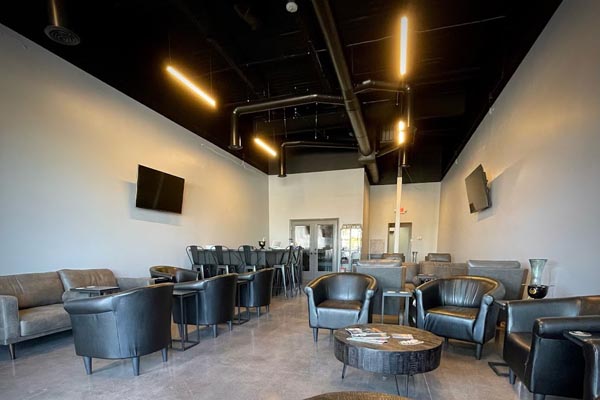
Room Dimensions:
- 1200 Square feet
- 14 foot ceilings
- Temp 68 Degrees
Viso Cigars ~ McKinney
Viso Cigar, where you can come together with other cigar lovers, build camaraderie, and share your passion for tobacco with others in the community. We have a spacious humidor, plenty of comfortable seating, and an advanced ventilation system to make your visit more enjoyable. Open 7 days a week!
Air Purification Equipment

- (4) LA2-RC2-HOC Smoke Eaters
- Level 4 Carbon Filter Odor Control

Room Dimensions
- 800 Square Feet
- 8 Foot Ceilings
Smoking Bear ~ Steamburg
Smokin’ Bear is a great place to enjoy your favorite cigar. This great establishment provides clean air using custom mounted LakeAir Smoke Eaters
Air Purification Equipment

- (3) LAFC-RC2 HEPA Smoke Eaters
- 1.0 Carbon Filter Odor Control
